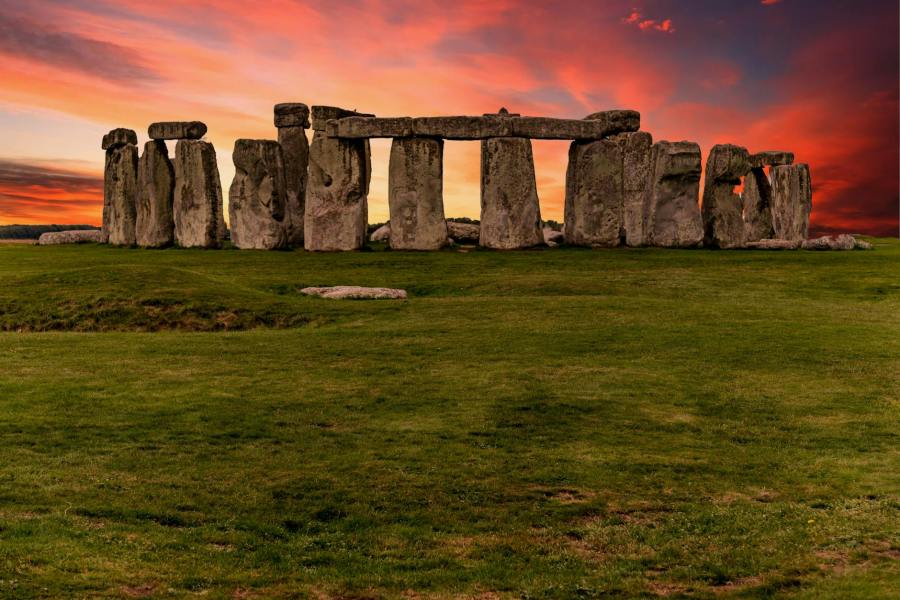
For the past few weeks, I have been thinking about something I read about in the story of the Israelites as they crossed the Jordan into Jericho. Let’s read the scripture together:
So Joshua summoned the twelve men he had appointed from the Israelites, one from each tribe, and said to them, “Cross over before the ark of the LORD your God into the middle of the Jordan. Each of you is to take a stone upon his shoulder, according to the number of the tribes of Israel, to serve as a sign among you. In the future, when your children ask, ‘What do these stones mean to you?’ you are to tell them, ‘The waters of the Jordan were cut off before the ark of the covenant of the LORD. When it crossed the Jordan, the waters were cut off.’ Therefore these stones will be a memorial to the Israelites forever.” Thus the Israelites did as Joshua had commanded them. They took up twelve stones from the middle of the Jordan, one for each tribe of Israel, just as the LORD had told Joshua; and they carried them to the camp, where they set them down. Joshua also set up twelve stones in the middle of the Jordan, in the place where the priests who carried the ark of the covenant stood. And the stones are there to this day.
Joshua 4: 4-9 BSB
Joshua, Israel’s new leader loved to erect monuments as reminders to Israelites. He erected two monuments, one in the Jordan River and one in their camp site after they crossed the Jordan River, as memorials of God’s faithfulness in keeping a longstanding promise to the Israelites. Later on we see that when Achan sinned against God, Joshua erected monument of stones over his grave to remind the Israelites to fear and obey God (Joshua 6). Whether as reminders of God’s faithfulness or His holiness, these monuments were important to Joshua. And every time he erected them, they were meant to point people back to God.
Now fast forward to the New Testament in Mark 13 and we see one of Jesus’ disciples describe the temple of Jerusalem. He said “Teacher, look at the magnificent stones and buildings!” (vs. 1). But Jesus’ response was rather astonishing: “Do you see all these great buildings?” Jesus replied. “Not one stone here will be left on another; every one will be thrown down” (vs. 2).
The temple of that day was a magnificent edifice, a monument, that had become significant to the Israelites. Unfortunately, the majesty that was accorded to the temple far surpassed that which was accorded to the God who inhabited the temple. Jesus pointed out to the disciple and anyone else who was listening that the manmade magnificent monument was going to come crashing down.
Let’s backtrack to Gen 11 where the early human race decided to erect a monument, a tower that reached up to the heavens.
“Come,” they said, “let us build for ourselves a city with a tower that reaches to the heavens, that we may make a name for ourselves and not be scattered over the face of all the earth.”
Gen 11:4 BSB
Their aim for erecting a monument could not have been more different from Joshua’s. The purpose of Tower of Babel was to make a name for themselves. As we go about our lives on a daily basis, our accomplishments and achievement become monuments and memorials that signal that we walked this earth and left a mark. Monuments are very important because they remind us of how far we have come (1 Samuel 7: 12). Monuments only become problematic when they do not point us and others towards God. When we begin to ascribe more majesty and glory to ourselves than the God who inhabits the temple of our bodies, then we are setting ourselves up for a great fall, where not one stone will be left on another!
Almost a year ago, one of our pastors in church preached a sermon from Gen 11 and she asked us to consider two important questions:
- What have I built in my own strength for my own fame that needs to be deconstructed?
- What towers have I built that shine a spotlight on my self instead of God?
Today, as you go about your life’s activities and work towards leaving a legacy behind, I ask you to consider these two questions above. If the stones of remembrance that you are erecting do not point you or others to God, then I encourage you to reorient your accomplishments back to the Source and Giver of good gifts. Jesus encouraged us that our works, our accomplishments, our fame, should always be for the glory of our Great God.
In the same way, let your light shine before men, that they may see your good deeds and glorify your Father in heaven. Matthew 5:16 BSB
This word is timely for me and hopefully for you as well. I leave you with the lyrics of this song:
All the glory must be to the Lord, Only He is worthy of our praise;
No one on earth should claim glory for Himself;
The glory must be to the Lord.
Yours Truly


 Intentional Christian Living